Skip to content
Toggle main navigation
Immunize Oregon logo
  • Welcome
    • Immunize Oregon
  • Vaxx Clinic
  • Events
  • Groups
  • News
  • Opportunities
  • Lobby
    Log in
    Request to join
    Select an available language
    EN

    News

    All
    3-D printing
    Abdul Latif Jameel Poverty Action Lab (J-PAL)
    Abdul Latif Jameel Water and Food Systems Lab (J-WAFS)
    Administration
    Aeronautical and astronautical engineering
    Africa
    Agriculture
    Algorithms
    Alumni/ae
    Alzheimer's
    Anesthesia
    Anthropology
    Antibiotics
    Artificial intelligence
    Asia
    See all

    Highlighted News

    Results (19)

    MIT engineers design a safer, more efficient vaccination system for farmed fish

    MIT engineers design a safer, more efficient vaccination system for farmed fish

    Fish that are cultivated in pools or ponds are an increasingly important source of food around the world. Unfortunately, disease outbreaks can cause substantial losses in aquaculture. Fish farmers use vaccines to prevent disease outbreaks just like regular farmers, but vaccinating a fish is a lot harder than vaccinating a cow. The most effective way to vaccinate fish today uses needles, but there
    November 2, 2026
    MIT engineers create nanoparticles for delivering personalized cancer vaccines

    MIT engineers create nanoparticles for delivering personalized cancer vaccines

    A nanoscale particle with a unique structure, developed at MIT, holds potential as a customizable delivery vehicle for personalized cancer vaccines.The backbone of the vaccine is a modified, harmless bacteriophage called M13, which forms a nanofiber that can be coated with cancer antigens. By precisely controlling the density of those cancer proteins, the researchers found that they could create a
    October 30, 2026
    A new technique could accelerate the development of RNA therapies

    A new technique could accelerate the development of RNA therapies

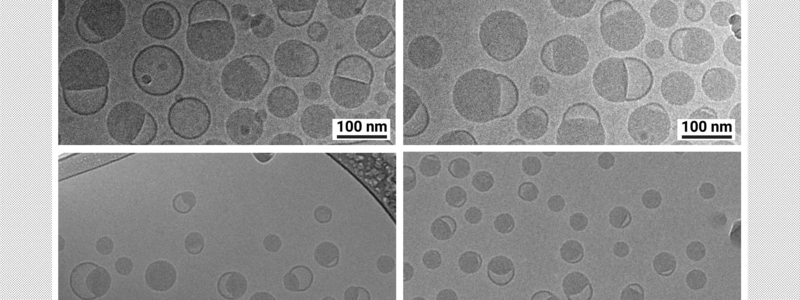
    RNA vaccines and other nucleic acid therapeutics are typically packaged within fatty molecules known as lipid nanoparticles (LNPs). MIT researchers have now come up with a way to produce these particles much more quickly, and with more precise control over their size and shape.This new process, which can be run automatically without any human intervention, could greatly speed up the development of
    September 25, 2026
    New vaccine platform promotes rare protective B cells

    New vaccine platform promotes rare protective B cells

    A longstanding goal of immunotherapies and vaccine research is to induce antibodies in humans that neutralize deadly viruses such as HIV and influenza. Of particular interest are antibodies that are “broadly neutralizing,” meaning they can in principle eliminate multiple strains of a virus such as HIV, which mutates rapidly to evade the human immune system.Researchers at MIT and the Scripps Resear
    February 5, 2026
    MIT study finds targets for a new tuberculosis vaccine

    MIT study finds targets for a new tuberculosis vaccine

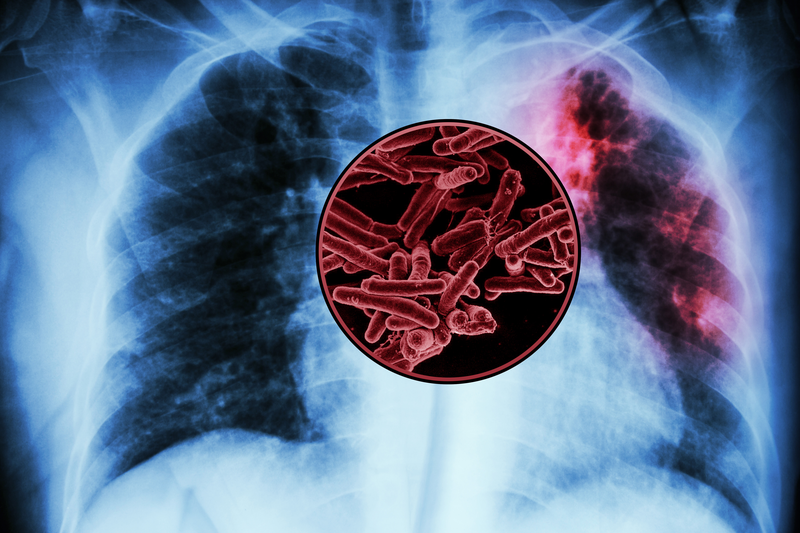
    A large-scale screen of tuberculosis proteins has revealed several possible antigens that could be developed as a new vaccine for TB, the world’s deadliest infectious disease.In the new study, a team of MIT biological engineers was able to identify a handful of immunogenic peptides, out of more than 4,000 bacterial proteins, that appear to stimulate a strong response from a type of T cells respons
    November 5, 2025
    A new approach to modeling complex biological systems

    A new approach to modeling complex biological systems

    Over the past two decades, new technologies have helped scientists generate a vast amount of biological data. Large-scale experiments in genomics, transcriptomics, proteomics, and cytometry can produce enormous quantities of data from a given cellular or multicellular system.However, making sense of this information is not always easy. This is especially true when trying to analyze complex systems
    November 5, 2024
    A two-dose schedule could make HIV vaccines more effective

    A two-dose schedule could make HIV vaccines more effective

    One major reason why it has been difficult to develop an effective HIV vaccine is that the virus mutates very rapidly, allowing it to evade the antibody response generated by vaccines.Several years ago, MIT researchers showed that administering a series of escalating doses of an HIV vaccine over a two-week period could help overcome a part of that challenge by generating larger quantities of neutr
    September 20, 2024
    A new way to reprogram immune cells and direct them toward anti-tumor immunity

    A new way to reprogram immune cells and direct them toward anti-tumor immunity

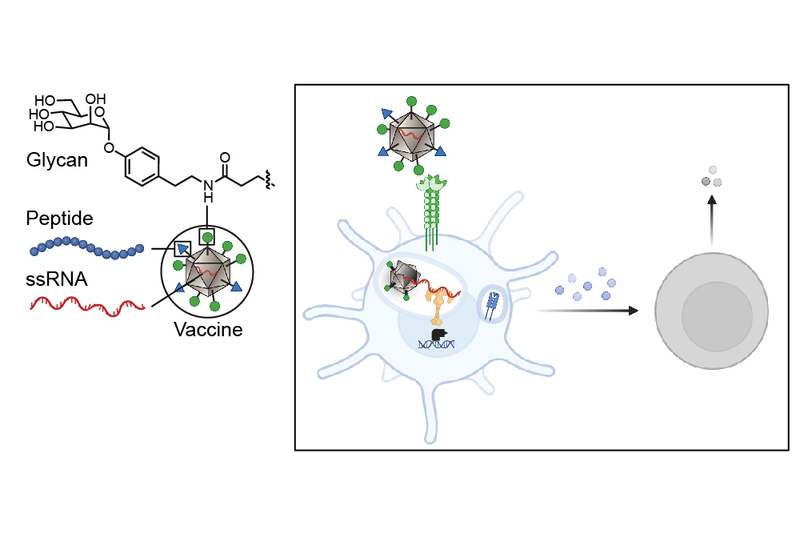
    A collaboration between four MIT groups, led by principal investigators Laura L. Kiessling, Jeremiah A. Johnson, Alex K. Shalek, and Darrell J. Irvine, in conjunction with a group at Georgia Tech led by M.G. Finn, has revealed a new strategy for enabling immune system mobilization against cancer cells. The work, which appears today in ACS Nano, produces exactly the type of anti-tumor immunity need
    September 16, 2024
    Hitchhiking cancer vaccine makes progress in the clinic

    Hitchhiking cancer vaccine makes progress in the clinic

    Therapeutic cancer vaccines are an appealing strategy for treating malignancies. In theory, when a patient is injected with peptide antigens — protein fragments from mutant proteins only expressed by tumor cells — T cells learn to recognize and attack cancer cells expressing the corresponding protein. By teaching the patient’s own immune system to attack cancer cells, these vaccines ideally would
    February 15, 2024
    Robert Langer receives Dr. Paul Janssen Award

    Robert Langer receives Dr. Paul Janssen Award

    MIT Institute Professor Robert S. Langer was recently honored with the 2023 Dr. Paul Janssen Award for his groundbreaking work in designing novel drug delivery systems that can deliver medications continuously, precisely, and at controlled rates over extended periods. Langer’s pioneering research into biomedical compounds for drug delivery and tissue engineering has impacted a wide range of medica
    February 13, 2024
    DNA particles that mimic viruses hold promise as vaccines

    DNA particles that mimic viruses hold promise as vaccines

    Using a virus-like delivery particle made from DNA, researchers from MIT and the Ragon Institute of MGH, MIT, and Harvard have created a vaccine that can induce a strong antibody response against SARS-CoV-2.The vaccine, which has been tested in mice, consists of a DNA scaffold that carries many copies of a viral antigen. This type of vaccine, known as a particulate vaccine, mimics the structure of
    January 30, 2024
    3 Questions: Darrell Irvine on making HIV vaccines more powerful

    3 Questions: Darrell Irvine on making HIV vaccines more powerful

    An MIT research team led by Professor Darrell Irvine has developed a novel kind of vaccine adjuvant: a nanoparticle that can help to stimulate the immune system to generate a stronger response to a vaccine. These nanoparticles contain saponin, a compound derived from the bark of the Chilean soapbark tree, along with a molecule called MPLA, each of which helps to activate the immune system. The adj
    December 12, 2023
    Vaccine delivers a boost to T cell therapy

    Vaccine delivers a boost to T cell therapy

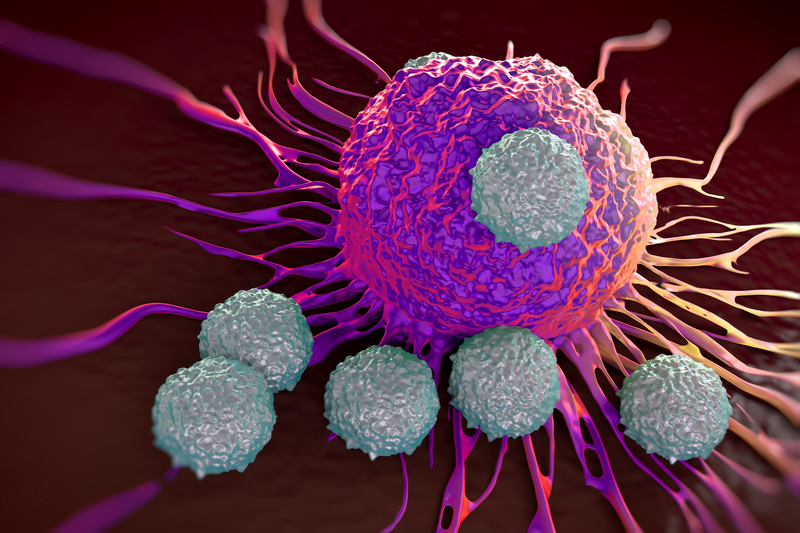
    Engineering T cells to destroy cancer cells has shown success in treating some types of cancer, such as leukemia and lymphoma. However, it hasn’t worked as well for solid tumors.One reason for this lack of success is that the T cells target only one antigen (a target protein found on the tumors); if some of the tumor cells don’t express that antigen, they can escape the T cell attack.MIT researche
    July 5, 2023
    Putting the STING into cancer immunotherapy

    Putting the STING into cancer immunotherapy

    Immune checkpoint blockade therapies have been revolutionary in the treatment of some cancer types, emerging as one of the most promising treatments for diseases such as melanoma, colon cancer, and non-small cell lung cancer.  While in some cases checkpoint blockade therapies elicit a strong immune response that clears tumors, checkpoint inhibitors do not work for all tumor types or all patients.
    May 12, 2023
    Creating a versatile vaccine to take on Covid-19 in its many guises

    Creating a versatile vaccine to take on Covid-19 in its many guises

    One of the 12 labors of Hercules, according to ancient lore, was to destroy a nine-headed monster called the Hydra. The challenge was that when Hercules used his sword to chop off one of the monster’s heads, two would grow back in its place. He therefore needed an additional weapon, a torch, to vanquish his foe.There are parallels between this legend and our three-years-and-counting battle with SA
    March 9, 2023
    2022-23 Takeda Fellows: Leveraging AI to positively impact human health

    2022-23 Takeda Fellows: Leveraging AI to positively impact human health

    The MIT-Takeda Program, a collaboration between MIT’s School of Engineering and Takeda Pharmaceuticals Company, fuels the development and application of artificial intelligence capabilities to benefit human health and drug development. Part of the Abdul Latif Jameel Clinic for Machine Learning in Health, the program coalesces disparate disciplines, merges theory and practical implementation, combi
    January 12, 2023
    2021-22 Takeda Fellows: Leaning on AI to advance medicine for humans

    2021-22 Takeda Fellows: Leaning on AI to advance medicine for humans

    In fall 2020, MIT’s School of Engineering and Takeda Pharmaceuticals Company Limited launched the MIT-Takeda Program, a collaboration to support members of the MIT community working at the intersection of artificial intelligence and human health. Housed at the Abdul Latif Jameel Clinic for Machine Learning in Health, the collaboration aims to use artificial intelligence to both benefit human healt
    February 1, 2022
    Immune system-stimulating nanoparticle could lead to more powerful vaccines

    Immune system-stimulating nanoparticle could lead to more powerful vaccines

    A common strategy to make vaccines more powerful is to deliver them along with an adjuvant — a compound that stimulates the immune system to produce a stronger response.Researchers from MIT, the La Jolla Institute for Immunology, and other institutions have now designed a new nanoparticle adjuvant that may be more potent than others now in use. Studies in mice showed that it significantly improved
    December 3, 2021
    Accelerating the pace of engineered cell therapies, from lab to bedside

    Accelerating the pace of engineered cell therapies, from lab to bedside

    What if a cancer patient could receive life-saving cellular therapy within days of diagnosis rather than weeks? What if pharmaceutical researchers could bring new treatments to market in months rather than years?Kytopen is significantly speeding up both discovery and delivery of engineered cell therapies with its transformative Flowfect platforms. The MIT spinout was co-founded by associate profes
    May 6, 2021
    Contact
    Immunize Oregon
    PO BOX 4391, Portland, Oregon 97208

    United States

    Coordinator@immunizeor.org
    Links
    • Immunize Oregon Website
    Cookies
    Reselect cookie settings
    Community engagement platform by Hivebrite.