Skip to content
Toggle main navigation
Immunize Oregon logo
  • Welcome
    • Immunize Oregon
  • Vaxx Clinic
  • Events
  • Groups
  • News
  • Opportunities
  • Lobby
    Log in
    Request to join
    Select an available language
    EN

    News

    All
    3-D printing
    Abdul Latif Jameel Poverty Action Lab (J-PAL)
    Abdul Latif Jameel Water and Food Systems Lab (J-WAFS)
    Administration
    Aeronautical and astronautical engineering
    Africa
    Agriculture
    Algorithms
    Alumni/ae
    Alzheimer's
    Anesthesia
    Anthropology
    Antibiotics
    Artificial intelligence
    Asia
    See all

    Highlighted News

    Results (16)

    MIT engineers create nanoparticles for delivering personalized cancer vaccines

    MIT engineers create nanoparticles for delivering personalized cancer vaccines

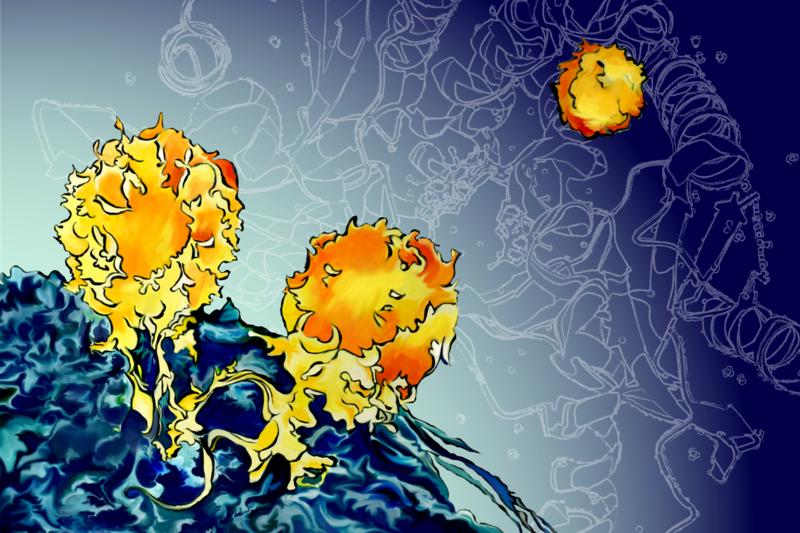
    A nanoscale particle with a unique structure, developed at MIT, holds potential as a customizable delivery vehicle for personalized cancer vaccines.The backbone of the vaccine is a modified, harmless bacteriophage called M13, which forms a nanofiber that can be coated with cancer antigens. By precisely controlling the density of those cancer proteins, the researchers found that they could create a
    October 30, 2026
    Harriet having it all

    Harriet having it all

    In winter 1997, at age 60, when many researchers might be looking forward to retirement, Harriet Latham Robinson SM ’61, PhD ’65 was pursuing a faculty position as the chief of microbiology and immunology at the Yerkes National Primate Research Center at Emory University in Atlanta, Georgia. She got the job. There, she would also co-found GeoVax, a biotechnology company, based on her preclinical r
    June 12, 2026
    A new approach to cancer vaccination yields more powerful T cells

    A new approach to cancer vaccination yields more powerful T cells

    MIT engineers have developed a new way to amplify the T-cell response to mRNA vaccines — an advance that could lead to much more powerful cancer vaccines and stronger protection against infectious diseases.Most vaccines generate both antibodies and T cells that can target the vaccine antigen by activating antigen-presenting cells, such as dendritic cells. In this study, the researchers boosted the
    May 13, 2026
    Biologists identify targets for new pancreatic cancer treatments

    Biologists identify targets for new pancreatic cancer treatments

    Researchers from MIT and Dana-Farber Cancer Institute have discovered that a class of peptides expressed in pancreatic cancer cells could be a promising target for T-cell therapies and other approaches that attack pancreatic tumors.Known as cryptic peptides, these molecules are produced from sequences in the genome that were not thought to encode proteins. Such peptides can also be found in some h
    May 8, 2025
    Is this the new playbook for curing rare childhood diseases?

    Is this the new playbook for curing rare childhood diseases?

    “There is no treatment available for your son. We can’t do anything to help him.”When Fernando Goldsztein MBA ’03 heard those words, something inside him snapped.“I refused to accept what the doctors were saying. I transformed my fear into my greatest strength and started fighting.”Goldsztein’s 12-year-old son Frederico was diagnosed with relapsing medulloblastoma, a life-threatening pediatric bra
    January 24, 2025
    A blueprint for better cancer immunotherapies

    A blueprint for better cancer immunotherapies

    Immune checkpoint blockade (ICB) therapies can be very effective against some cancers by helping the immune system recognize cancer cells that are masquerading as healthy cells. T cells are built to recognize specific pathogens or cancer cells, which they identify from the short fragments of proteins presented on their surface. These fragments are often referred to as antigens. Healthy cells will
    November 25, 2024
    A new way to reprogram immune cells and direct them toward anti-tumor immunity

    A new way to reprogram immune cells and direct them toward anti-tumor immunity

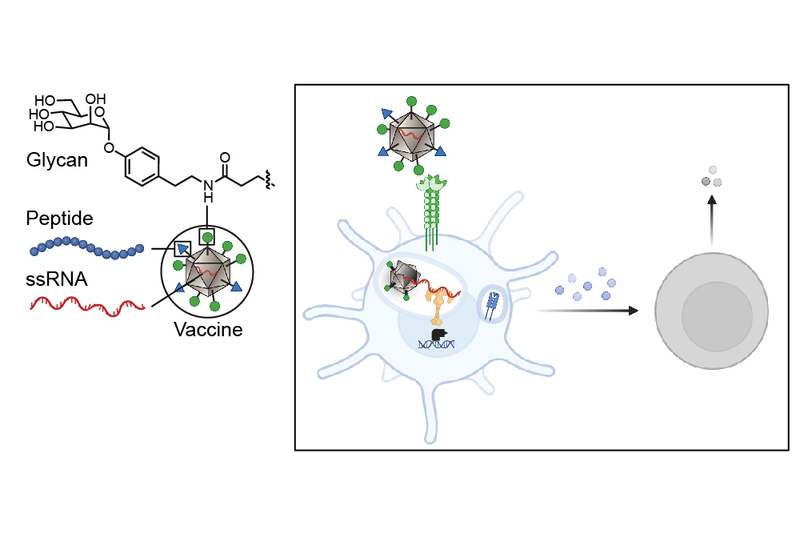
    A collaboration between four MIT groups, led by principal investigators Laura L. Kiessling, Jeremiah A. Johnson, Alex K. Shalek, and Darrell J. Irvine, in conjunction with a group at Georgia Tech led by M.G. Finn, has revealed a new strategy for enabling immune system mobilization against cancer cells. The work, which appears today in ACS Nano, produces exactly the type of anti-tumor immunity need
    September 16, 2024
    Hitchhiking cancer vaccine makes progress in the clinic

    Hitchhiking cancer vaccine makes progress in the clinic

    Therapeutic cancer vaccines are an appealing strategy for treating malignancies. In theory, when a patient is injected with peptide antigens — protein fragments from mutant proteins only expressed by tumor cells — T cells learn to recognize and attack cancer cells expressing the corresponding protein. By teaching the patient’s own immune system to attack cancer cells, these vaccines ideally would
    February 15, 2024
    MIT’s tiny technologies go to Washington

    MIT’s tiny technologies go to Washington

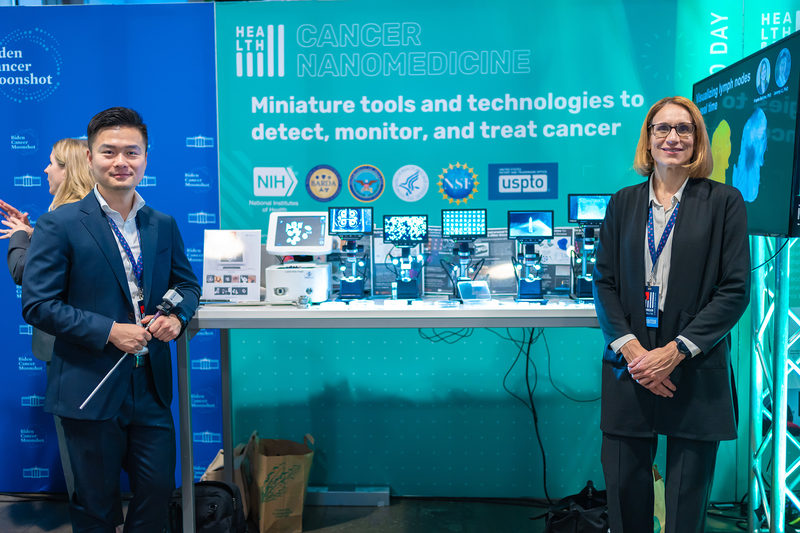
    On Nov. 7, a team from the Marble Center for Cancer Nanomedicine at MIT showed a Washington audience several examples of how nanotechnologies developed at the Institute can transform the detection and treatment of cancer and other diseases.The team was one of 40 innovative groups featured at “American Possibilities: A White House Demo Day.” Technology on view spanned energy, artificial intelligenc
    December 18, 2023
    A snapshot of cancer vaccine development

    A snapshot of cancer vaccine development

    The road to effective cancer vaccines has been long and difficult.  Although initial attempts to use a vaccine to treat cancer date back to the 1910s, the first effective therapeutic vaccine would not emerge until about a century later, when Sipuleucel-T was used to treat prostate cancer in 2010. While the FDA-approved prostate cancer vaccine generated much excitement, its success has proven diffi
    August 15, 2023
    Vaccine delivers a boost to T cell therapy

    Vaccine delivers a boost to T cell therapy

    Engineering T cells to destroy cancer cells has shown success in treating some types of cancer, such as leukemia and lymphoma. However, it hasn’t worked as well for solid tumors.One reason for this lack of success is that the T cells target only one antigen (a target protein found on the tumors); if some of the tumor cells don’t express that antigen, they can escape the T cell attack.MIT researche
    July 5, 2023
    Putting the STING into cancer immunotherapy

    Putting the STING into cancer immunotherapy

    Immune checkpoint blockade therapies have been revolutionary in the treatment of some cancer types, emerging as one of the most promising treatments for diseases such as melanoma, colon cancer, and non-small cell lung cancer.  While in some cases checkpoint blockade therapies elicit a strong immune response that clears tumors, checkpoint inhibitors do not work for all tumor types or all patients.
    May 12, 2023
    Microparticles could be used to deliver “self-boosting” vaccines

    Microparticles could be used to deliver “self-boosting” vaccines

    Most vaccines, from measles to Covid-19, require a series of multiple shots before the recipient is considered fully vaccinated. To make that easier to achieve, MIT researchers have developed microparticles that can be tuned to deliver their payload at different time points, which could be used to create “self-boosting” vaccines.In a new study, the researchers describe how these particles degrade
    July 13, 2022
    Advocating for vaccine equity

    Advocating for vaccine equity

    When Digbijay Mahat arrived at MIT in 2017 to begin his postdoctoral studies, he had one very clear goal: to become an expert in cancer research and diagnostics so he could improve health care in Nepal, where he was born. In 2020, when the Covid-19 pandemic laid bare additional discrepancies in resource equity around the world, his goal did not waiver. But it did expand to fill a more immediate ne
    March 18, 2022
    Biologists identify new targets for cancer vaccines

    Biologists identify new targets for cancer vaccines

    Over the past decade, scientists have been exploring vaccination as a way to help fight cancer. These experimental cancer vaccines are designed to stimulate the body’s own immune system to destroy a tumor, by injecting fragments of cancer proteins found on the tumor.So far, none of these vaccines have been approved by the FDA, but some have shown promise in clinical trials to treat melanoma and so
    September 16, 2021
    Accelerating the pace of engineered cell therapies, from lab to bedside

    Accelerating the pace of engineered cell therapies, from lab to bedside

    What if a cancer patient could receive life-saving cellular therapy within days of diagnosis rather than weeks? What if pharmaceutical researchers could bring new treatments to market in months rather than years?Kytopen is significantly speeding up both discovery and delivery of engineered cell therapies with its transformative Flowfect platforms. The MIT spinout was co-founded by associate profes
    May 6, 2021
    Contact
    Immunize Oregon
    PO BOX 4391, Portland, Oregon 97208

    United States

    Coordinator@immunizeor.org
    Links
    • Immunize Oregon Website
    Cookies
    Reselect cookie settings
    Community engagement platform by Hivebrite.